Moto Ondoso: Venice's Wave Damage Problem and the Limits of Electric Boats
The slow destruction of Venice by motor traffic has a name that residents use without needing to explain it. Moto ondoso is the wave motion generated by powered boats, and it is doing measurable structural damage to a city built on brick, timber piles, and Istrian stone that were never designed to be hit repeatedly at the waterline.
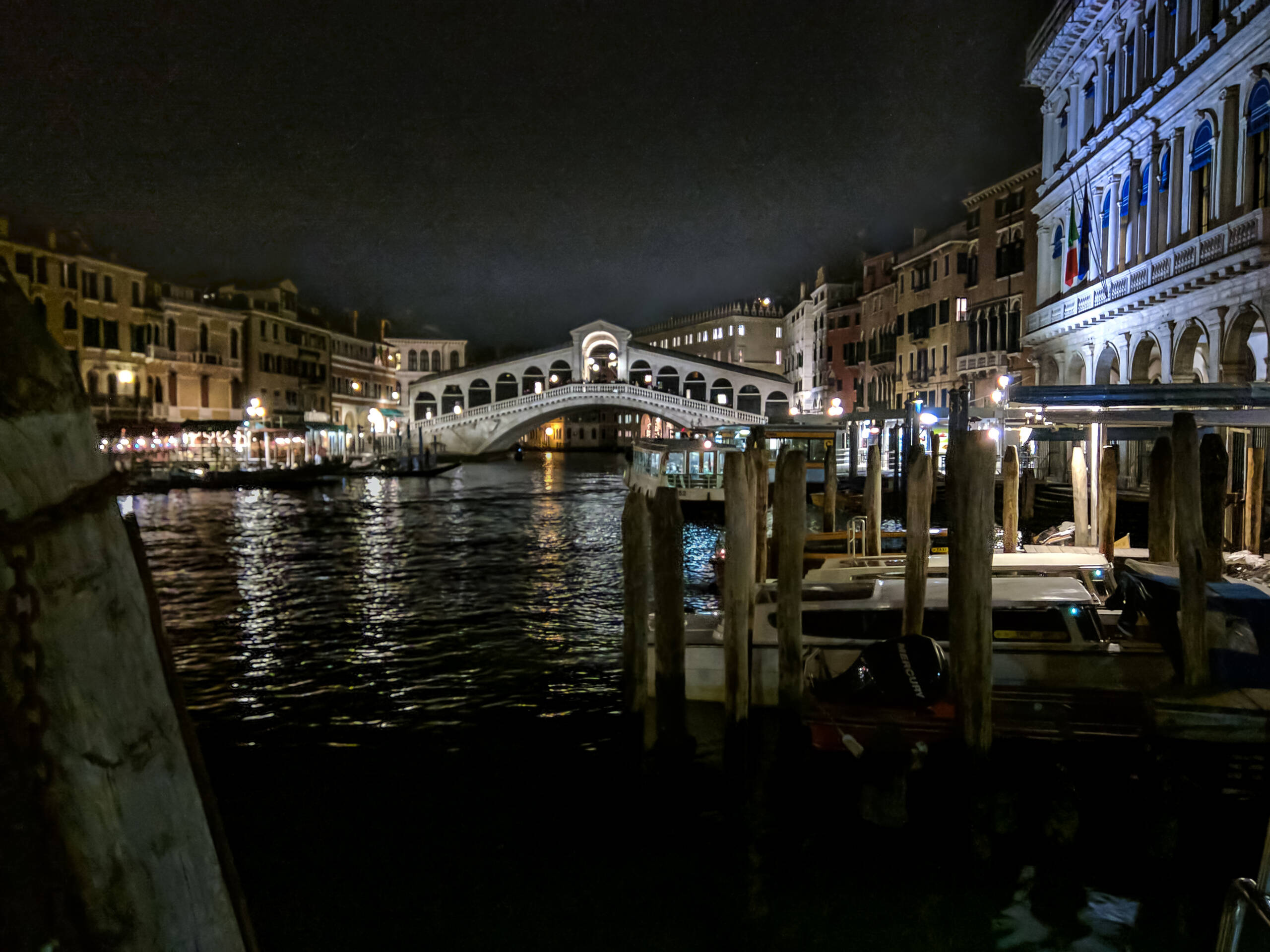
The mechanism is straightforward. Wake washes against the quay walls and building foundations, scours out the mortar, and exposes the brick. The exposed brick absorbs salt water, which crystallises inside the pore structure as it dries and breaks the material apart from within. Water also gets behind the stone facing and erodes the fill. The damage concentrates in a band around the waterline and it is cumulative, because every hull that passes adds another cycle to a wall that never fully dries.
Speed limits exist. They are widely treated as advisory, enforcement is thin relative to the number of hulls, and the boats with the strongest commercial incentive to move quickly are the ones generating the worst wake.
Here is where the clean-propulsion argument needs to be honest with itself. Wake is a function of hull form, displacement, and speed. It is not a function of what turns the propeller. An electric water taxi doing twelve knots through a side canal produces essentially the same destructive wash as a diesel one doing twelve knots. Swapping the powertrain and leaving the operating profile alone solves the emissions problem and leaves the structural problem exactly where it was.
What electrification does deliver is real, but it should be described accurately. It removes local exhaust and particulates in an enclosed basin with poor air exchange. It cuts noise substantially, which matters in a residential centre where canals act as sound channels. It improves efficiency at the low speeds that the city actually wants boats to travel at, since electric drive holds efficiency far better at part load than a diesel does. And it makes slow operation cheaper to run, which is the first time the incentive has pointed the right way.
The infrastructure obstacle is charging. Quayside power in a UNESCO-listed centre means trenching through protected fabric, siting cabinets where nothing may visibly change, and finding grid capacity on islands whose distribution networks were laid for domestic load. The public fleet has an easier path here, because vaporetti return to fixed berths on a timetable and can be charged at depots, which is why hybrid and battery-electric public boats have moved faster than the private fleet. Hydrogen has been trialled in the lagoon as well, and the case for it rests on the same berth-based refuelling logic.
The policy conclusion follows from the physics. Electrify for air quality, noise, and running cost. Regulate hull form and speed for the walls. Treating the first as a substitute for the second is how a city ends up with a quiet, clean fleet still knocking its foundations apart.