Water, Fuel, and the Fragile Edge of the Harbor: Environmental Safeguards at Tanker Jetties
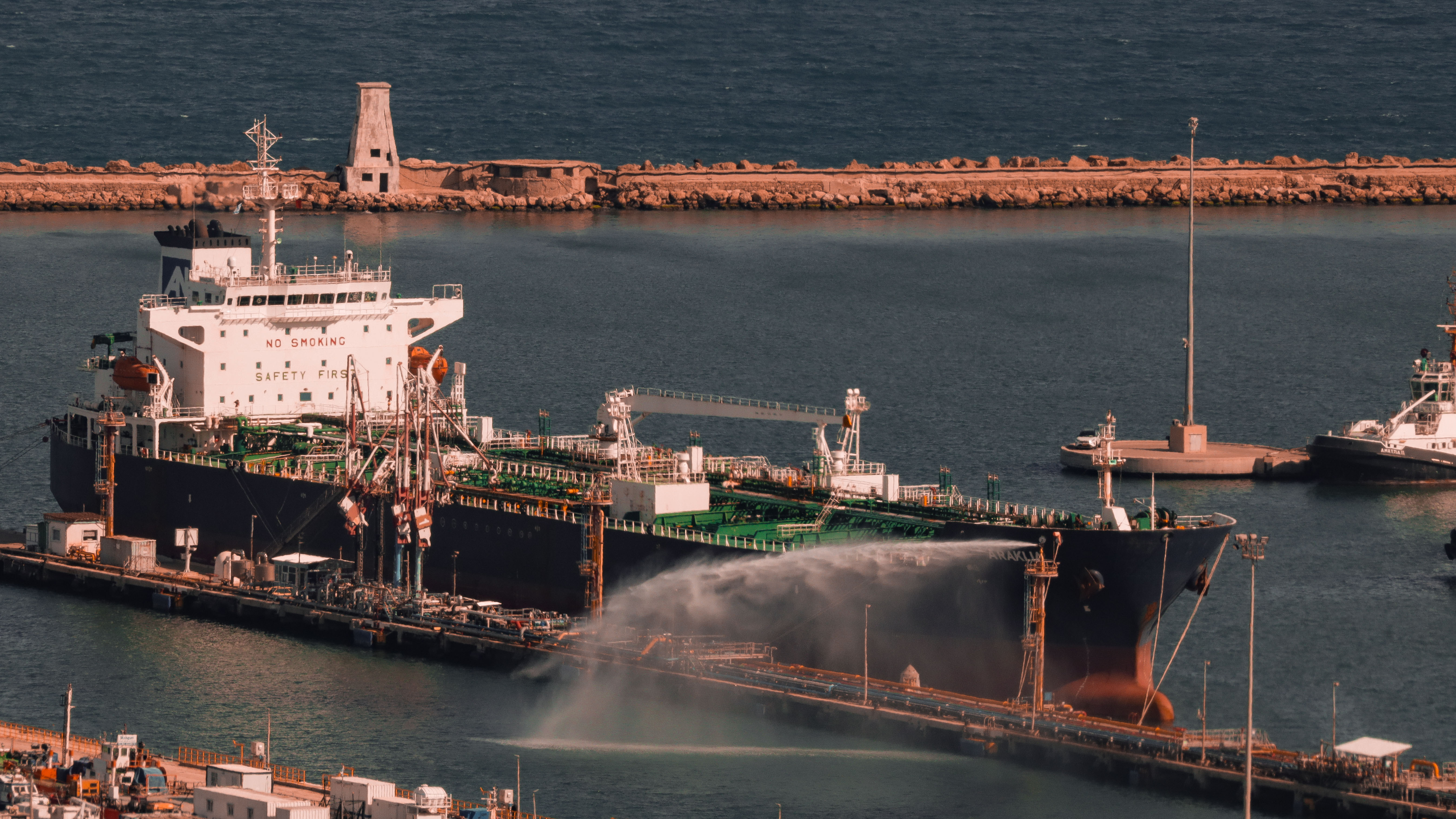
From a distance the scene looks almost picturesque: a tanker resting alongside a jetty while a high arc of water sweeps across its bow and disperses into the harbor air. Tugboats idle nearby, the water surface calm, the breakwater in the background keeping the open sea at bay. Yet for those who work in maritime logistics or environmental compliance, this moment represents something far more serious than a routine port operation. It reflects the quiet, constant effort ports must invest to prevent environmental disasters at liquid cargo terminals.
Tanker jetties occupy a particularly sensitive position in the maritime ecosystem. These structures sit literally at the intersection of industrial energy supply chains and natural marine environments. On one side are pipelines carrying gasoline, diesel, chemicals, or other petroleum products; on the other side lies open water supporting fisheries, coastal habitats, and often nearby urban populations. A single failure during cargo transfer—a leaking flange, a damaged hose, or a ruptured loading arm—can release thousands of liters of product into the water within minutes. Because of that risk, environmental protection is embedded deeply into the design and operation of modern tanker terminals.
The sweeping water monitor seen operating near the tanker illustrates one of the many environmental control mechanisms built into such facilities. While the most obvious purpose of these monitors is firefighting, they also play an important environmental role during emergencies. Large water curtains can knock down flammable vapor clouds, dilute airborne hydrocarbons, and prevent toxic gases from spreading toward nearby port areas. In situations involving chemical cargoes, rapid deployment of water streams can help contain or disperse hazardous vapors before they reach populated zones.
Beyond emergency response, tanker jetties are equipped with layers of environmental safeguards designed to prevent spills from reaching open water in the first place. Cargo transfer systems are fitted with breakaway couplings that automatically disconnect if a ship drifts away from the berth, preventing pipelines from tearing apart. Spill containment trays and drainage systems capture small leaks before they reach the sea. Many terminals also install hydrocarbon detection sensors along the jetty that trigger alarms if even trace amounts of fuel appear where they should not.
Another key environmental protection measure is vapor management. During loading operations, hydrocarbons naturally evaporate from tanks as cargo flows into the vessel. Without proper control, these vapors could escape into the atmosphere, contributing to air pollution and creating explosion hazards. Modern tanker terminals increasingly rely on vapor recovery units that capture these emissions and return them to storage or processing systems rather than allowing them to dissipate into the harbor environment.
Operational procedures are just as important as infrastructure. Tanker berthing operations follow strict protocols intended to minimize environmental risk. Mooring tensions are carefully monitored to ensure the ship remains stable during cargo transfer. Weather conditions are continuously assessed because strong winds or heavy swell could place stress on loading arms and hoses. In many ports, cargo transfer automatically stops if sensors detect abnormal pressure changes or if the vessel moves beyond a safe limit relative to the jetty.
Environmental preparedness also extends to response capability in the event that a spill does occur. Ports handling liquid cargo maintain stockpiles of containment booms, skimmers, absorbent materials, and specialized cleanup vessels. Tugboats stationed nearby can deploy these resources quickly while also providing firefighting support if needed. Many ports conduct regular environmental response drills, simulating oil spill scenarios to ensure that personnel and equipment can react quickly enough to protect surrounding waters.
These safeguards reflect a growing recognition across the shipping industry that environmental risk is inseparable from operational safety. Coastal communities, regulators, and port authorities expect terminals to manage not only the efficient movement of fuel but also the protection of fragile marine ecosystems. Modern tanker terminals are therefore designed less like simple loading docks and more like controlled industrial zones where environmental monitoring, emergency response, and engineering safeguards operate together.
Watching the water arc across the tanker’s bow, a casual observer might see nothing more than a striking visual moment in a busy harbor. For port professionals, however, it represents something deeper: a reminder that every tanker berth stands at the delicate boundary between industrial necessity and environmental responsibility. The systems that protect ships and crews also serve a larger purpose, guarding the water itself from the consequences of the cargo moving through the port.