EU Countries Agree on 2026 Fishing Quotas, Sidestepping New Mediterranean Restrictions
The image settles into you quietly: a single fisherman sits on a folding chair at the edge of a wide, calm shoreline, his back to the camera, his long rod cutting a clean diagonal line across the frame and pointing toward the open water. The sea is flat and muted, neither blue nor gray but something in between, as if the day itself is undecided. A string of floating buoys drifts parallel to the coast, gently interrupting the surface, while distant mountains fade into a hazy horizon that almost dissolves into the sky. Far off to the right, barely there, a ship moves slowly, reminding you that this apparent stillness is part of a much larger system. The sand in the foreground is marked with footprints and small disturbances, human presence lingering even when nothing is happening. It’s a scene about patience, restraint, and limits — themes that feel almost accidental until you realize how neatly they echo this week’s political reality.
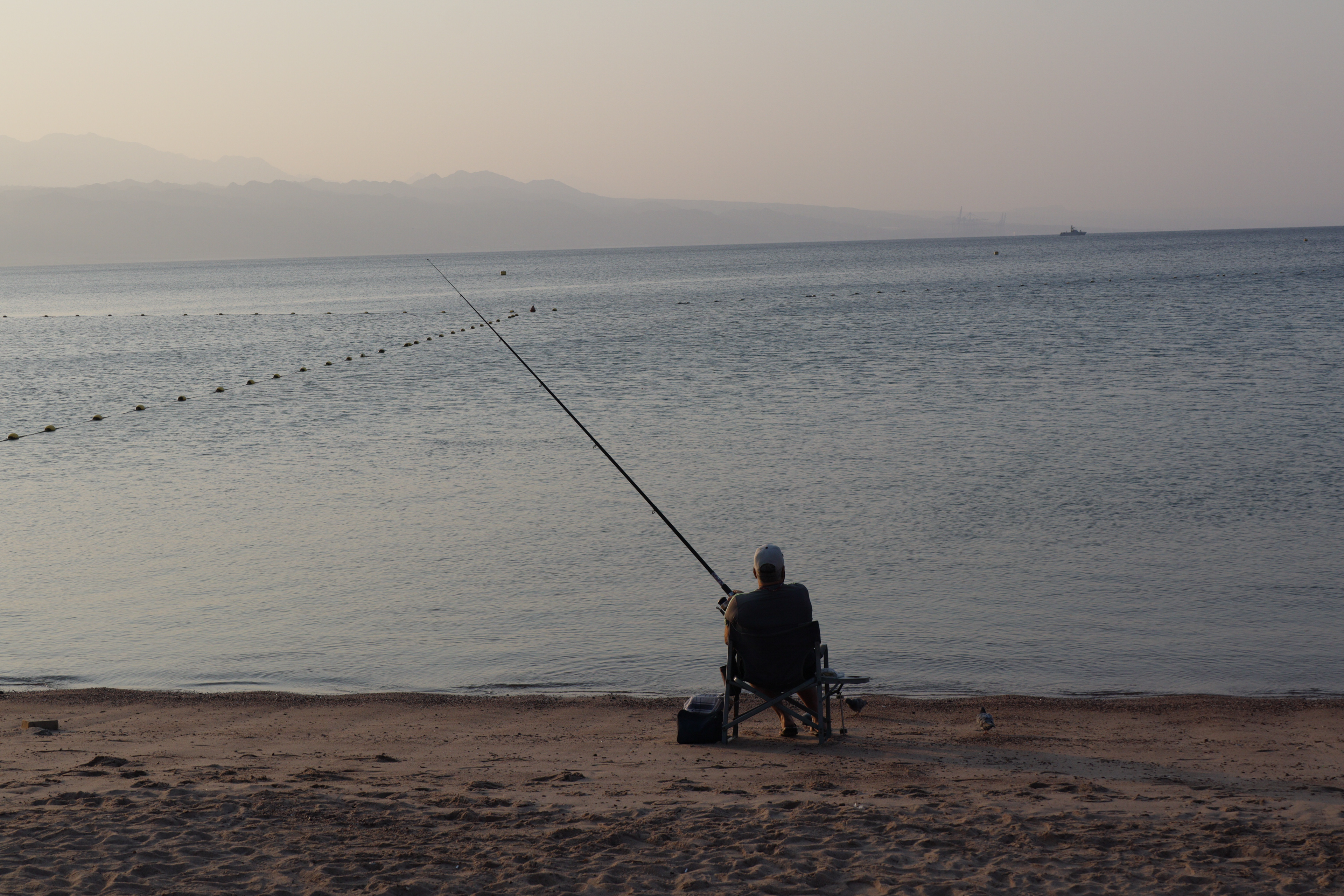
Shot with Canon R100 and a TTArtisan 50mm f/1.2
Against that kind of quiet backdrop, EU countries have reached agreement on fishing quotas for 2026, opting to avoid additional tightening of Mediterranean fishing restrictions. The decision, finalized after long negotiations among member states, reflects a growing tension inside the European Union between ecological responsibility and economic survival for coastal communities. While northern waters will still see quota adjustments tied closely to scientific stock assessments, the Mediterranean stands apart, treated as a space where further cuts could tip already fragile fishing economies into outright collapse. Officials framed the agreement as pragmatic rather than permissive, insisting it stabilizes effort rather than encouraging overfishing — though that distinction, admittedly, lives in the fine print.
What makes the Mediterranean case different is its structure. Unlike quota-heavy Atlantic fisheries, Mediterranean fishing is already governed by effort limits, gear rules, seasonal closures, and spatial controls. Many governments argued that piling new restrictions on top of this framework would produce diminishing returns for conservation while accelerating the disappearance of small-scale operators. In other words, the fisherman in the photo — solitary, quiet, almost anonymous — has become the unspoken reference point. Not the industrial trawler, not the spreadsheet, but the human scale of fishing as lived experience. Several southern EU states pushed hard on this narrative, warning that further curbs risk hollowing out coastal cultures without delivering measurable stock recovery.
Environmental groups, predictably, are less convinced. They point out that Mediterranean fish stocks remain among the most overexploited in European waters and argue that postponing tighter controls merely defers an inevitable reckoning. From their perspective, restraint today looks like avoidance tomorrow. Yet policymakers seem increasingly wary of one-size-fits-all solutions, especially after years of inflation, fuel cost shocks, and political pressure from rural and maritime regions. The 2026 agreement reads less like a bold strategy and more like a holding pattern — a pause, not a pivot.
Looking back at the image, that pause makes sense in a strangely visual way. The fisherman isn’t hauling anything in, isn’t racing against time, isn’t competing for space. He’s waiting, watching the line, accepting uncertainty as part of the process. The EU’s approach to Mediterranean quotas feels similar: cautious, static, perhaps intentionally slow. Whether that patience turns into stewardship or stagnation will depend on what comes next — better enforcement, better data, and a clearer vision of what sustainable fishing actually looks like when translated from policy rooms to shorelines like this one.